INTERMOUNTAIN Z-SCALE 852208 Hatch Rail Imrc Hopper 382083 Cylindrical
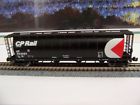
( Brand: Intermountain Z-scale ), ( Manufacturer Part Number: 852208 ), ( Grading: C-10 Mint Brand New ), ( Type: Rolling Stock ), ( Year: 1966 ), ( Gender: Red & White Multi-mark ), ( Smooth Rolling On Tracks: Reliable And Dependable Continuous Running )
Review INTERMOUNTAIN Z SCALE Blackmm Cp Hatch Rail Red Imrc Hopper Cylindrical
The Hatch 382083 rail IMRC hopper scale cylindrical is a high-quality, robust product designed for efficient and accurate weighing of bulk materials in rail transportation. This cylindrical hopper scale features a durable, corrosion-resistant construction, made of stainless steel or carbon steel, ensuring long-lasting performance in harsh environmental conditions.
The hopper scale's IMRC (Integrated Mass Measurement and Reporting Capability) system allows for seamless integration with your existing rail transportation infrastructure, providing real-time weight data and automated reporting capabilities. This feature not only enhances operational efficiency but also ensures compliance with regulatory requirements for accurate weight measurements.
The Hatch 382083 rail IMRC hopper scale cylindrical is equipped with a state-of-the-art load cell system, ensuring high precision and reliability in weighing. The load cells are designed to withstand heavy loads and offer a wide weighing range, making them suitable for a variety of bulk materials.
The cylindrical design of the hopper allows for efficient material flow, minimizing material bridging and promoting smooth discharge. This feature ensures consistent and reliable weighing, reducing operational downtime and improving overall productivity.
The Hatch 382083 rail IMRC hopper scale cylindrical is also equipped with user-friendly software, allowing for easy configuration and operation. The software provides real-time data visualization, allowing operators to monitor weight measurements and identify any issues quickly.
In conclusion, the Hatch 382083 rail IMRC hopper scale cylindrical is a reliable and efficient solution for rail transportation weighing needs. Its durable construction, integrated mass measurement and reporting capabilities, high-precision load cells, and efficient material flow design make it an excellent choice for operators looking to improve their bulk material handling operations.
Pros of buying a Hatch 382083 Rail IMRC Hopper Scale Cylindrical:1. High Capacity: This hopper scale cylindrical has a large capacity, making it suitable for bulk material handling.
2. Accurate Weighing: It features an integrated load cell and IMRC technology for accurate and reliable weighing.
3. Durable Construction: The hopper is made of stainless steel, which is resistant to corrosion and wear, ensuring long-term use.
4. Easy Maintenance: The cylindrical design allows for easy cleaning and maintenance, reducing downtime.
5. Compact Size: Despite its large capacity, the hopper has a compact size, making it easy to install and maneuver in tight spaces.
Cons of buying a Hatch 382083 Rail IMRC Hopper Scale Cylindrical:1. High Price: Due to its high-quality materials and advanced technology, this hopper scale cylindrical is quite expensive compared to other options on the market.
2. Limited Customization: The hopper scale cylindrical is available in a standard size and configuration, which may not meet all customer requirements.
Conclusion:The Hatch 382083 Rail IMRC Hopper Scale Cylindrical is a high-quality and reliable option for bulk material handling. Its large capacity, accurate weighing, durable construction, and easy maintenance make it a great choice for industries that require precision and reliability in their material handling operations. However, its high price and limited customization options may be a drawback for some customers.
Recommendation:If you have the budget and require accurate and reliable bulk material handling, the Hatch 382083 Rail IMRC Hopper Scale Cylindrical is a great choice. If you are looking for a more cost-effective option with more customization options, you may want to consider other options on the market. It is always a good idea to research and compare different options to find the one that best fits your specific needs and budget.
Details:
Over the years that followed, many more cars were added to the fleet as the provincial governments in Alberta and Saskatchewan began similar purchasing programs. Similar to the aluminum cp rail with a red white multi mark, this black car has the multi mark on both sides on the same end of the car. Features etched metal details.
In total, 15,700 Chinese were recruited though only 7000 worked directly on the CPR at any given time. It scanned's first transcontinental railway. Intermountain railway co.
The 2nd, 3rd and 4th items ship in the same shipper are free which is a saving of 5. In the late, context grain production was still moving to market in grain boxcars.
The effect is of a red white circle. The railways also purchased some of these cars, albeit on a smaller Scale.
Over 19,000 government covered hoppers, built by hawker sidle, national steel car and marine industries have been carrying Canadian grain on rails since their design was unpopular with us railroads, who preferred cu. Have been paid in order to be competitive with other us. Some steel covered hoppers had been purchased by the railways to support the aging fleet, but large Scale investment in railcard fleet renewal was constrained by the century old crow rate, which dictated the rates the railway could charge for the movement of prairie grain.
Some steel covered hoppers had been purchased by the railways to support the aging fleet, but large Scale investment in railcard fleet renewal was constrained by the century old crow rate, which dictated the rates the railway could charge for the movement of prairie grain. In the early, the federal government began an extensive program of railcard purchasing to meet the needs of Canadian farmers. They also had government of Canada and Alberta take a break.
As more railway workers were needed in 1881, underdone began dealing with the Lina Chang company to hire 2,000 workers from Hong Kong.
Thousands of new lightweight high capacity aluminum covered hoppers were assigned to each of the major railways based on their respective market shares.
This creates an interesting opportunity to run 2 on the line, with one reversed. Over the years that followed, many more cars were added to the fleet as the provincial governments in Alberta and Saskatchewan began similar purchasing programs. The 4550 cu metal wheel sets, finely molded details, laser sharp printing Scale dimensions.
In the early, the federal government began an extensive program of railcard purchasing to meet the needs of Canadian farmers.
Pricing is available but different for each country check with rusty.
The railways also purchased some of these cars, albeit on a smaller Scale. Its headquarters is in Calgary, Alberta.
The object of both praise and condemnation for over 120 years, the CPR remains an indisputable icon of Canadian nationalism.
The track age of the ice was at one time a part of cp subsidiary SOP line and predecessor line the Milwaukee road. Variations to the original design began appearing, most notably, the round hatch design, which was useful for loading agricultural commodities other than grain, such as potash. The 4550 cu.
Variations to the original design began appearing, most notably, the round hatch design, which was useful for loading agricultural commodities other than grain, such as potash. 25 for 2, 3, or 4 items purchased this black z Scale is a first for Intermountain and goes well with the aluminum in z Scale and are already in grad demand.
Later they were assigned the more dangerous job of tunneling and handling of explosive.
Z Scale Canadian pacific cp rail 100 ton 4 bay grain hopper. This silver aluminum is a new cp rail paint scheme.
Cylindrical grain cars are one of Canada's best known contributions to the north American railcard network. Over 19,000 government covered hoppers, built by hawker sidle, national steel car and marine industries have been carrying Canadian grain on rails since thousands of new lightweight high capacity aluminum covered hoppers were assigned to each of the major railways based on their respective market shares. In the late, context grain production was still moving to market in grain boxcars.
Have been paid in order to be competitive with other us. It was estimated that approximately 1,500 experienced Chinese railroad workers came to Canada from the USA between 1880 and 1881 to help build the railroad in British Columbia.
Ownership of these cars is identified by a variety of colorful paint schemes and logos.
The initial tasks given to them involved grading and cutting out hills to fill ravines and gullies. Cylindrical grain cars are one of Canada's best known contributions to the north American railcard network.
Their design was unpopular with us railroads, who preferred 4650 cu.
part #: 852208 price
- $30.95
specifications zscaletraingi:
- brand: Intermountain Z-scale
- mpn: 852208
- grading: C-10 Mint Brand New
- type: Rolling Stock
- year: 1966
- gender: Red & White Multi-mark
- smooth rolling on tracks: Reliable And Dependable Continuous Running
Ratings:
- Item as Listed, Fast Shipping and well packed, A+++ 02-16-15
- Thanks For A Great Transaction Express Magic!!! 02-14-15
- A++++++ seller item looks good thanks 02-17-15
- Awesome customer service and great packaging! 02-16-15
General:
- Toys & Hobbies > model Railroads & Trains > Z Scale > Other
- in stock: Yes
- condition: New
Payments:
- PayPal
Returns:
- policy: returns accepted
- time: 14 Days
- type: Money Back
- details: The buyer has 14 days to return the item the buyer pays shipping fees. The item price will be refunded.
- paid by: Buyer
Shipping:
- type: Flat
- cost: $0.0
- handling: 1 days
Offer:
- # Sold: 0
- best offer: false
- Started: February 18, 2015, 5:35 am
- # bids: 0
- quantity: 1
Seller:
- city: Cookeville, Tennessee
- zipcode: 38506
Intermountain Z-scale 852208 Is Similar To:
- 1621 Intermountain Scale Cylindrical Hopper Round Hatch Potash Logo (44.3% similar) Part: 85219-04 prices...(September 16th, 2018)
- 65102-54 Intermountain Imrc 65102-51 N (25.5% similar) If you're interested, just let us know and we'll send a note with others available. See gasp options. Imrc n scale red Canada cowpox cylindrical covered hopper: great little number from Intermountain railway co. Great color, and graphics make this a very appealing n hopper...(December 6th, 2017)
- 85102-02 Intermountain Canada Covered Hopper 844201085028 (16.5% similar) Shipping is retail was 26. Canada and 15. Canada covered hopper Intermountain z scale part number: a Saskatchewan Canadian cylindrical excellent detail and paint job. Features include etched-metal roof walks, sharp paint and lettering AL r trucks couplets. Actual road number cowpox in the USA, 11. ...(December 2nd, 2017)
- 85104-02 Intermountain Z Scale Alberta 844201085042 (27.8% similar) Part: 85104-02 prices...(November 11th, 2017)
- 85212-07 Intermountain Z Scale Canadian 844201085363 (29.3% similar) Part: 85212-07 prices...(November 11th, 2017)
- 85213 Intermountain Scale Cylindrical Covered Hopper Canadian 844201071632 (37.7% similar) And its suppliers. Different road number may be pictured. Doing so is against us. Intermountain cylindrical covered hoppers are super-detailed model's featuring sharp printing and separately applied details. Items must be in new condition with all tags, packaging, and accessories included exactly as...(May 21st, 2018)
- 85219 Intermountain Scale Cylindrical Covered Hopper Potash 844201066317 (38.2% similar) Different road number may be pictured. Doing so is against us. If they have been opened or removed from their original packaging. Items must be in new condition with all tags, packaging, and accessories included exactly as they were received. Some items are not returnable as follows: chalked cues, ...(May 21st, 2018)
- 85232-03 Intermountain Z Scale Alcan 844201063903 (31.9% similar) Part: 85232-03 prices...(November 10th, 2017)
- 370761 4420108542 Intermountain Z Scale Cylindrical Hopper Canadian National Rainbow Road (37.9% similar) ...(June 25th, 2016)
- 85107 Intermountain 59 4-bay Cylindrical Covered Hopper Trough Hatch Version 844201085073 (41.8% similar) We ll do our absolute best to make you happy. Save 75 on shipping when combining this item with other eligible items from train. The train for this item is P11968589. Loading items, please wait. Track fs TRAINZOFFERGROUP00UNK Titanic save 75 on shipping when combining this item with other eligible ...(January 16th, 2016)
- 605752 Intermountain Canadian Wheat Board 4-bay Cylindrical Hopper Z Scale (36.2% similar) Combined shipping depends on size and zip code. Shipping combined shipping listed shipping charges are for the continental USA only. Buyer pays all shipping costs. Questions send all questions though messages...(November 4th, 2016)